
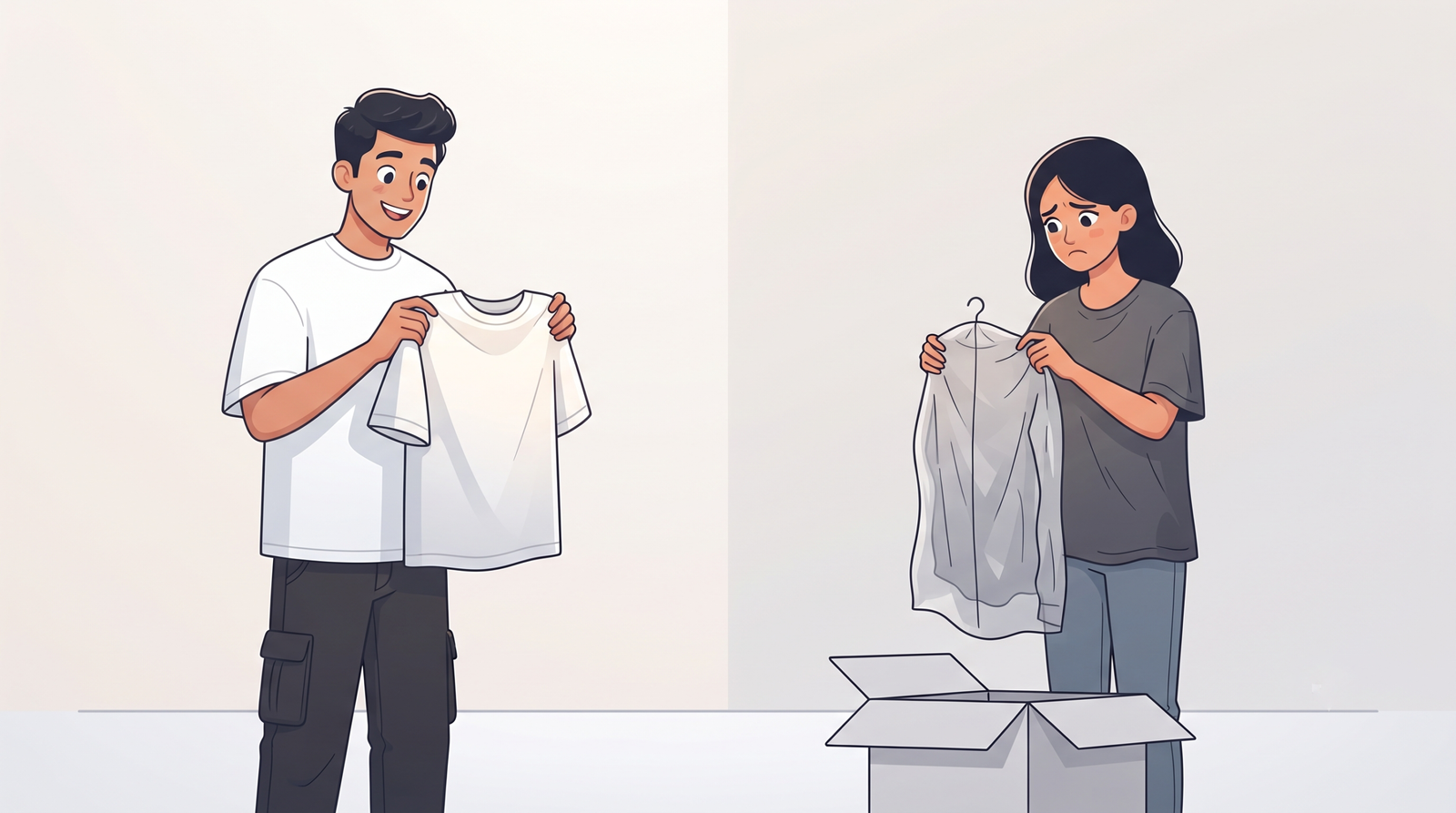
Shopping for clothes online is a total gamble sometimes. But if you want to know how to check shirt quality before buying, you don’t actually have to guess…
Look, we’ve all been there. You’re scrolling late at night, spot a seriously cool graphic tee, and hit order without thinking twice. Two days later, the package arrives, you rip it open, and… instant regret. The fabric feels like cheap tissue paper, or worse, it warps into a completely different shape the second it hits the washing machine.
Shopping for clothes online is a total gamble sometimes. Because you can’t actually touch the cloth, pull it, or feel the weight with your hands, you’re basically flying blind.
Except, you don’t actually have to guess. If you know what sneaky marketing tricks to ignore and what tiny details to hunt for in the product description, you can spot a trash-tier shirt from a mile away. Let’s talk about how to actually check shirt quality before handing over your hard-earned cash.
Why Online Clothing Shopping Keeps Disappointing You
Let’s be honest: brands are really good at making mediocre clothes look high-end in photos. Professional studio lighting, heavy editing, and perfectly styled models make thin, scratchy poly-blends look thick and premium.
If a brand’s website only gives you vague fluff like “super-soft luxury fabric” without telling you what the fabric actually is, run. Good clothing brands aren’t shy about their specs—they want you to know. Once you learn a couple of basic textile terms, all that marketing BS suddenly stops working on you.
Reading Between the Lines: GSM and Fabric Stuff
This is where most people get tripped up. The absolute biggest secret to whether a shirt will last three years or three washes comes down to two things: material composition and GSM.
First off, what the heck is GSM?
GSM stands for Grams per Square Meter. Basically, it’s how heavy or dense the cloth is. If a listing doesn’t mention GSM, that’s strike one.
- Under 160 GSM: This is super thin and lightweight. Honestly, it’s great if you live somewhere crazy humid, but it’s probably going to be see-through (especially white tees) and won’t take much abuse before tearing.
- 180 to 220 GSM: This is the absolute sweet spot for everyday t-shirts and streetwear. It feels heavy enough to hang properly on your body, doesn’t show your chest hair, and holds prints nicely without roasting you alive.
- 240 GSM and Up: Heavyweight territory. If you’re buying boxy fits or oversized streetwear tees, this is what you want. It feels thick, premium, and basically indestructible.
What about the actual fabric?
Don’t just look for “cotton.” Look for combed cotton or ring-spun cotton. It means the short, prickly fibers have been combed out, leaving only the long, soft ones.
Cheap polyester blends? Yeah, they dry fast if you sweat a lot, but in regular weather, they trap body odor like crazy and pill up into those annoying little fuzz balls after a month. Stick to pure cotton or heavy cotton blends unless you’re hitting the gym.
Tiny Details to Hunt For in Photos & Descriptions
Since you can’t feel the seams yourself, you have to play detective with the product zoom and description tab:
- Check the collar ribbing: Zoom in on the neckline. Is it thin and floppy? If yes, it’s going to stretch out and look all wavy after three washes. You want a thick, tight, ribbed collar (ideally with a tiny bit of spandex or elastane mixed in to snap right back into place).
- Stitching clues: Look at the shoulder seams. Good shirts usually have shoulder-to-shoulder taping—a little strip of fabric running inside the seam to keep the shoulders from sagging out. If the stitches look messy or loose in the product photos, skip it.
- The print quality (for graphic tees): If it’s a printed shirt, check what kind of print it is. Direct-to-Garment (DTG) or proper screen printing sinks into the fabric and lasts. If it looks like a thick, shiny plastic sticker slapped onto the chest, it’s going to crack and peel right off in the dryer.
- Pre-shrunk notes: Cotton shrinks. Period. If the description doesn’t mention “pre-shrunk,” that cool oversized tee you bought might turn into a crop top the first time you wash it on warm.
Stupid Mistakes We All Make (And Should Stop)
- Trusting the price tag: Just because a shirt costs ₹1,500 doesn’t mean it’s high quality. Plenty of hype brands slap a massive price tag on 140 GSM garbage. Always check the specs, ignore the price.
- Ignoring the actual size chart: S, M, and L mean nothing anymore. Every brand sizes things differently. Take an old t-shirt that you love the fit of, lay it flat on your bed, measure it with a tape, and compare it to the brand’s actual numbers.
- Assuming all cotton is the same: Carded cotton is rough and cheap; combed ring-spun cotton is smooth and durable. Learn the difference.
A Quick Cheat Sheet Before You Hit “Buy”
- Is the GSM actually listed (aim for 180+ for regular, 220+ for oversized)?
- Does the description specify combed or ring-spun cotton?
- Does the collar look thick and ribbed in the close-up photos?
- Have you matched your own measurements against their actual size chart instead of just guessing “Medium”?
Quick FAQ Section
What should I check before buying a T-shirt online?
Honestly, check the GSM weight, the fabric breakdown (like 100% ring-spun cotton), how thick the collar looks, and whether they have a real chest-measurement size chart instead of just generic S/M/L letters.
How can I tell if a T-shirt is good quality just from a photo?
You gotta look at the close-ups. Look for tight collar ribbing, clean stitching along the hems, and clear text in the description about fabric weight. If the brand is hiding specs and only posting dramatic model shots, that’s a red flag.
What GSM is best for a normal everyday t-shirt?
Go for 180 to 200 GSM. It’s thick enough to look structured and opaque, but light enough that you won’t melt outside. If you’re doing heavy streetwear or boxy fits, push it to 220–240 GSM.
Why does my online t-shirt always shrink after one wash?
Because it wasn’t pre-shrunk during manufacturing. Regular cotton naturally contracts when exposed to heat. Always check if the label says “pre-shrunk,” or just wash your cotton tees in cold water and air dry them.
Ready to stop wasting money on flimsy clothes that fall apart? Take a look at our collection of everyday cotton basics
and oversized graphic t-shirts
built with heavy-duty fabrics, solid stitching, and actual quality specs. Find your exact fit and shop smart today at The SocialSoul Store!